Thoughts about the Faroese Housing Market
A storm is coming...
Published on May 25, 2025
🕒 5 min read
Recently, I returned to the Faroe Islands, the land where legends are born. Driven by curiosity, I set out to explore the local housing market. I spoke with bankers, real estate agents, and everyday residents, aiming to uncover the deeper truths behind the numbers. This wasn’t just casual research — it was a quest to confront the housing market head-on and face the dragon at the heart of it.
Through my conversations with local residents, a common theme emerged: most are living on a thin budget. Those who purchased homes within the past three years are now scaling back their spending just to keep up with monthly house payments. In some cases, people are even sacrificing basic necessities to stay afloat. It’s clear that the system is fragile. A small shock could push many into serious financial distress.
Real estate agents painted a different picture. According to them, the market is still “hot” and prices will continue to rise. But when pressed with harder questions, a more nuanced reality emerged. Every agent I spoke to admitted that homes are sitting on the market longer than before. On average, it now takes about 50 days to sell a house, compared to just 40 in 2024. They also acknowledged a noticeable drop in buyer competition, with fewer bids coming in per property. And buyers have become more passive — initial bids are now often starting 35% below the asking price.
Even the banks are showing signs of concern. The ones I spoke with explained that they’ve significantly tightened lending standards for property loans. While they are still willing to lend up to 4 times a household's gross income, stricter conditions now apply.
Most notably, borrowers must demonstrate that, after covering all monthly expenses, including mortgage payments, they have a minimum amount left over:
- 5,500 DKK per adult
- 2,500 DKK per child
Take, for example, a family of five, two parents and three children. According to these rules, they must have:
(5500 × 2) + (2500 × 3) = 11,000 + 7,500 = 18,500 DKK
This means that after paying for housing, bills, and other obligations, the family must still have 18,500 DKK left to live on each month. For the vast majority of households, especially those with recent mortgages, this threshold is simply not attainable.
Hearing all this, the engineer in me got curious, what do the numbers actually say? So I dusted off my Python skills and began digging into the data. From Hagstovan (the Faroese statistics office), I gathered two key datasets: the average house price and the average salary, spanning from 1998 to 2024.
To get a clearer picture of affordability over time, I calculated the ratio of average house price to average salary, a simple but powerful metric. Here's the chart that emerged:
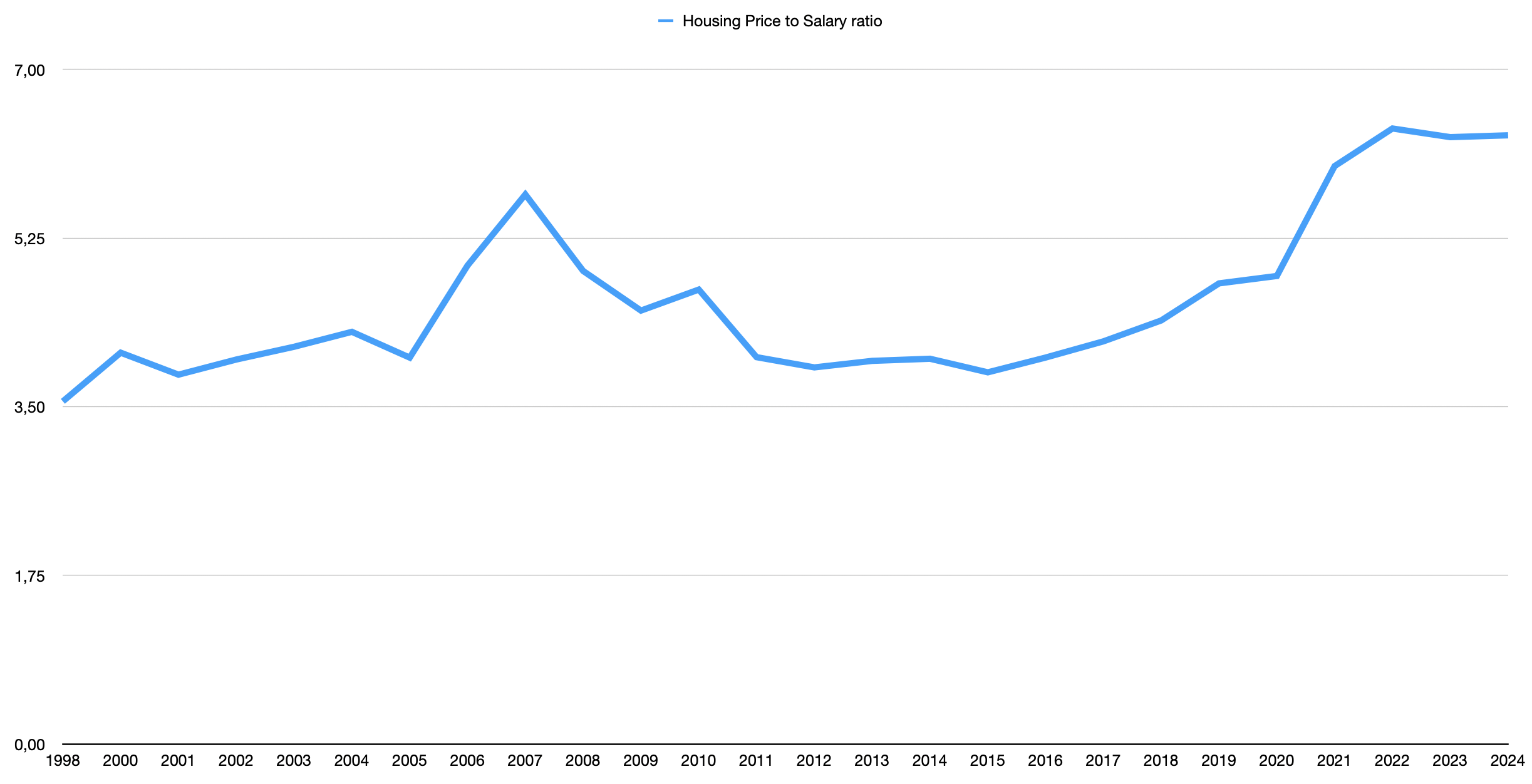
The results were interesting. The ratio peaked in 2007 right before the Great Financial Crisis (GFC) of 2009, a period during which many people were financially devastated. Fast forward to 2024, and the chart is starting to look top heavy again. This could be an early signal of instability within the housing system.
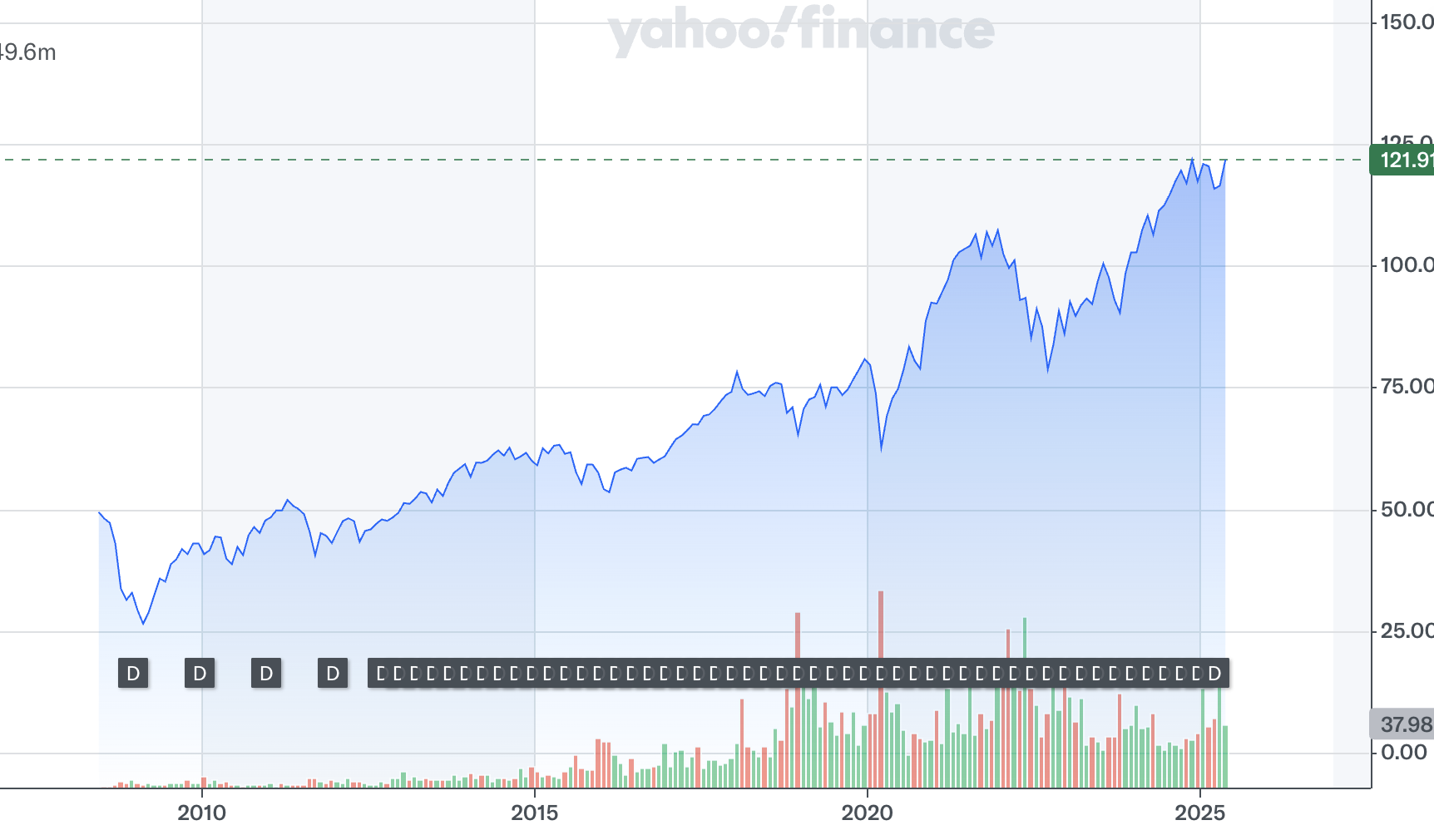
To expand the perspective, I also compared the housing market against the Vanguard Total World Stock Index Fund (VT) to check for broader economic correlation. VT’s data only goes back to 2008, but even so, the patterns are striking. There appears to be a rough alignment between global equity markets and the Faroese housing market — a reminder that no market exists in isolation.
Still Not Satisfied…
But my curiosity wasn’t satisfied yet — I needed more numbers. So, I returned to Hagstovan and pulled data for new residential constructions from 1998 to 2024. I expanded the Python script to analyze and plot the following:
- Change in new constructions
- Change in average paid salary
- Change in average house price
- Change in the house price-to-salary ratio
Here’s the chart that came out of that analysis:
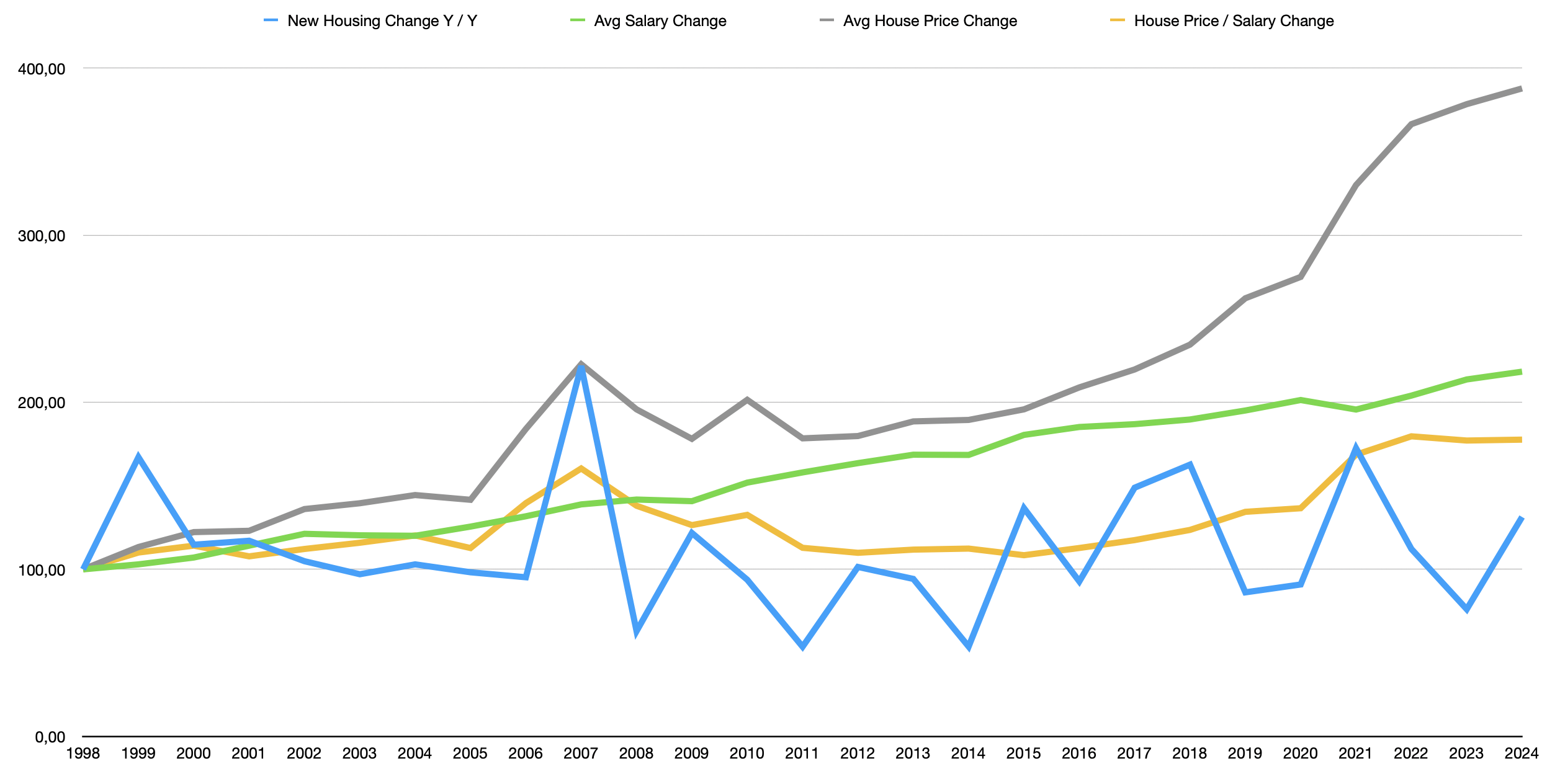
The trends are intriguing. Several indicators suggest that the market is either peaking or has already peaked. However, the new construction data tells a different story, it doesn’t yet confirm the top. Ideally, a market peak would be accompanied by a explosion in new construction, but we don’t see that reflected here.
That said, 2025 may hold the missing piece. If new construction numbers flatten or drop next year, it could be the confirmation we’re waiting for. Until then, the system remains in a delicate balance.
For now, all we can do is remain calm and patient.
Until next time..
- Bardur